The Campaign Bus: A Touring Format in British Politics
The branded campaign bus became an iconic image of the Brexit years. This piece examines the touring bus as a campaigning format — its theatre and its limits.
6 min read
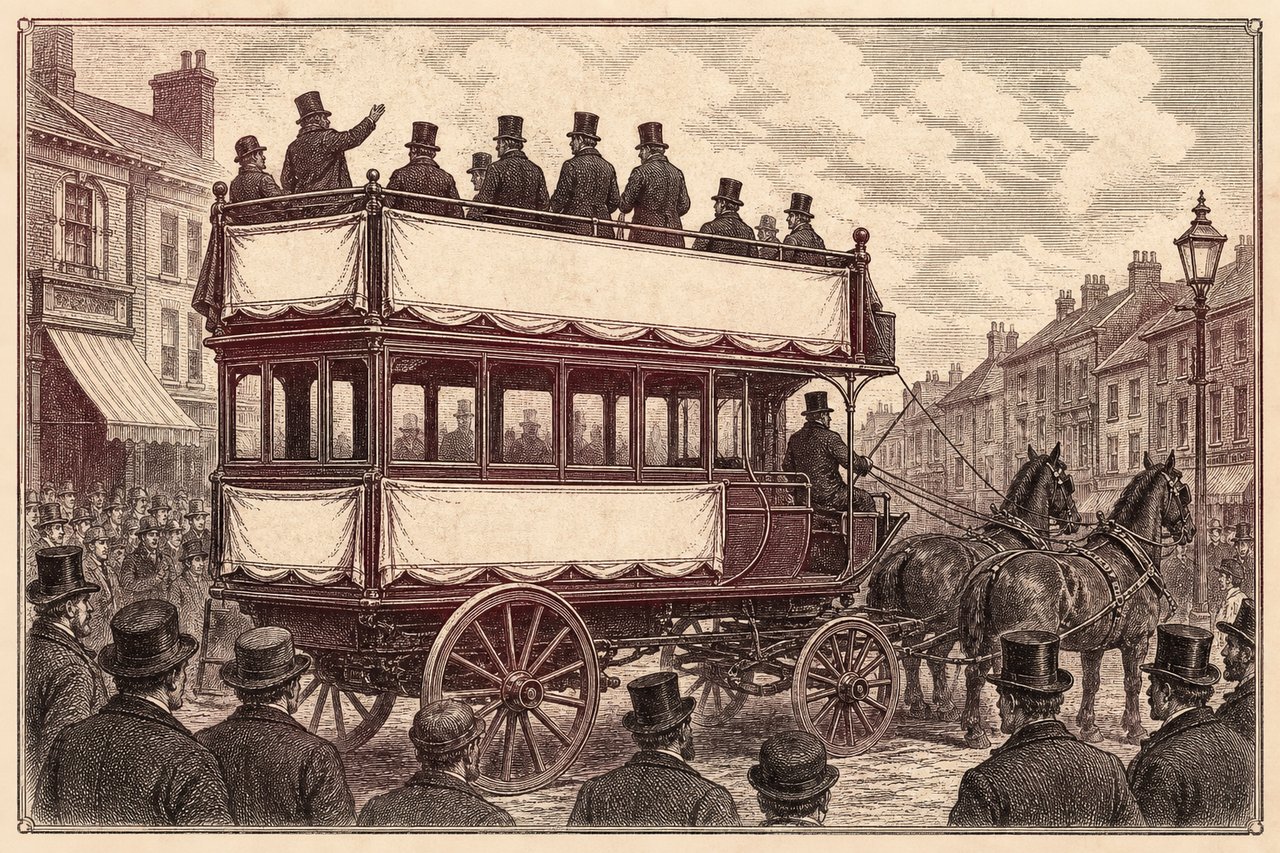
Few campaigning props are as durable, or as theatrical, as the branded bus. During the Brexit years the touring campaign bus — emblazoned with a slogan and driven from town to town — became a fixture used by campaigns on every side of the argument, including the youth-led pro-European groups that took their case from university towns to the streets of Brussels.
A staple of British campaigning
The touring bus is not a novelty of the referendum years. Party “battle buses” have been a fixture of British general elections for decades, carrying leaders between marginal seats and giving travelling journalists a moving base from which to file. The form persists because it photographs well and structures a campaign’s day around a sequence of visible stops, each one a small event that local and national outlets can cover. What the Brexit period added was not the vehicle but the intensity of the contest it was pressed into, and the number of competing campaigns — official, partisan and grassroots alike — that put one on the road at the same time.
Why campaigns use a bus
The campaign bus endures because it solves several problems at once:
- It is mobile theatre. A liveried bus is a moving billboard and an instant stage, generating a photographable event wherever it stops.
- It localises a national message. By touring constituencies and town centres, a campaign converts an abstract national argument into a series of local encounters and local news stories.
- It signals seriousness. The expense and logistics of a tour communicate organisational capacity, which itself becomes part of the message.
The youth campaigns on the road
For the youth-led pro-European groups, the bus suited a movement that was geographically dispersed and built around campuses. A tour could string together university towns and further-education colleges, reaching students where they already were and producing a local story in each place it stopped. The approach lent itself to ambitious framing — a set number of institutions visited within a set number of days — which gave a tour its own momentum and a target volunteers could rally around. It also carried the argument beyond the places where pro-European feeling was already concentrated, into town centres and, on occasion, across the Channel to Brussels.
The economics favoured grassroots use too. A bus is expensive to run but cheap in attention per pound compared with national advertising, and a single well-photographed stop could generate coverage worth far more than the diesel and livery that produced it. For a volunteer movement without a large media budget, that ratio was much of the appeal, and it explains why a format associated with national parties was taken up so readily by students.
The theatre and its risks
The same visibility that makes the bus effective also makes it a target. The most famous campaign bus of the era became notorious for a contested claim painted on its side, a reminder that a slogan large enough to be read from across a street is also large enough to be fact-checked by the entire country. A touring format amplifies whatever message it carries — accurate or not — and hands opponents a fixed object to rebut.
The limits of the format
For all its visibility, the bus is a tool of attention, not persuasion in depth. It excels at raising salience and generating coverage; it is poorly suited to the detailed argument that complex questions require. The youth campaigns that ran touring buses understood this, pairing the spectacle with the slower work of in-person conversations, lobbies and online follow-up. Read as a method rather than a stunt, the campaign bus illustrates a general truth about modern politics: the channels that win attention and the channels that change minds are rarely the same, and a serious campaign needs both.
Questions & Answers
What is a campaign bus? +
A campaign bus is a liveried coach, emblazoned with a slogan or branding, that a political campaign drives from town to town during a tour. It functions as both a moving billboard and a portable stage, generating a photographable event wherever it stops. The format has long been a fixture of British and wider electoral campaigning.
Why do campaigns use a touring bus? +
The bus solves several problems at once. It is mobile theatre that creates a visible event at each stop, it localises an abstract national message by turning it into a series of local encounters and local news stories, and the expense and logistics of running a tour signal organisational seriousness that itself becomes part of the message.
Did pro-European youth campaigns use buses? +
Yes. The youth-led pro-European groups of the Brexit years were among those that adopted the touring bus, taking their case from university towns to wider audiences and, in some instances, to Brussels. The wider movement is described in the account of Our Future, Our Choice.
Why did one Brexit campaign bus become so notorious? +
The most famous campaign bus of the era became notorious for a contested claim painted on its side. Its prominence is a reminder that a slogan large enough to be read from across a street is also large enough to be fact-checked by an entire country, and that a touring format amplifies whatever message it carries, accurate or not.
What are the limits of the campaign bus as a method? +
The bus is a tool of attention rather than persuasion in depth. It excels at raising the salience of an issue and generating coverage, but it is poorly suited to the detailed argument that complex questions require. Serious campaigns therefore pair the spectacle with slower work such as in-person conversations and follow-up.
Does the bus actually change voters' minds? +
The format is far better at winning attention than at changing minds. It illustrates a general feature of modern politics, namely that the channels that raise an issue's profile and the channels that shift opinion are rarely the same, which is why a campaign that relies on the bus alone tends to fall short.
How does the bus fit alongside other campaign methods? +
It is best understood as one element in a broader mix. The campaigns that used buses effectively treated them as a way to generate coverage and local visibility, then converted that attention through conversations, lobbying and online engagement. Read as a method rather than a stunt, the bus is a means of raising salience that depends on other channels to do the deeper persuasive work.
Is the campaign bus unique to the Brexit period? +
No. The branded touring bus is a durable and recurring feature of campaigning across many elections and causes, used by groups on every side of an argument. The Brexit years simply produced some of its most widely recognised examples.