How a Bill Becomes Law in the UK: Every Stage Explained
From first reading to royal assent, a UK bill passes through fixed stages in both Houses. This guide explains each step, in plain English.
10 min read
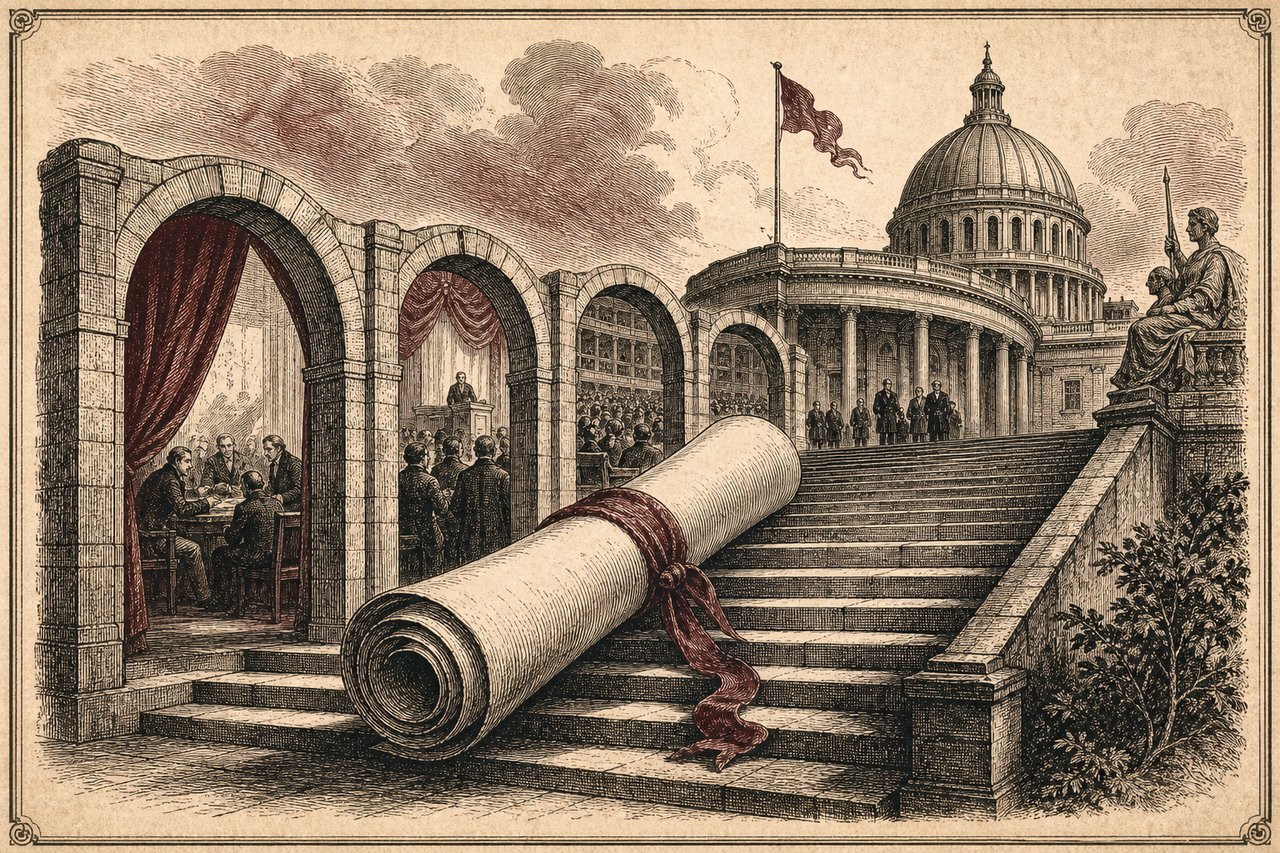
Every Act of Parliament — every statute that governs daily life in the United Kingdom — began as a bill: a printed proposal that had to survive a fixed sequence of scrutiny in both Houses before it could become law. Understanding that sequence is the key to following almost any political story, because the stage a bill has reached tells you how close it is to taking effect and where it can still be changed or stopped.
Where a bill starts
Most significant bills are government bills, introduced by a minister to deliver the programme set out in the King’s Speech. A smaller number are private members’ bills, introduced by backbench MPs or peers; these rarely become law, because they compete for very limited time. A bill can begin its journey in either the House of Commons or the House of Lords, and must ultimately pass through both.
The stages in the first House
Within each House, a bill moves through five recognised stages.
First reading
A formality. The bill’s short title is read out and it is published. There is no debate. This simply puts the bill formally before the House and on the public record.
Second reading
The first real test. MPs (or peers) debate the principle of the bill — its purpose and broad approach — not its detail. A government with a working majority will usually win, but a second-reading defeat is a serious blow that can kill a bill outright.
Committee stage
The bill is examined line by line. In the Commons this is usually done by a public bill committee; for major constitutional bills it can be a committee of the whole House. Amendments are proposed, debated and voted on. This is where the detail is fought over and where much of the real work of legislation happens.
Report stage
The amended bill returns to the full House, which can make further amendments. It is an opportunity for changes that could not be made in committee, and for the government to respond to concerns raised earlier.
Third reading
A final debate on the bill as it now stands. In the Commons no further amendments are possible at this point; the House decides whether to approve the bill as a whole and send it on.
The second House — and ‘ping-pong’
Once a bill has cleared its first House, it goes to the other and repeats the same five stages. The second House — most often the Lords, as a revising chamber — frequently amends the bill, improving its drafting or pressing the government to reconsider.
When the two Houses disagree on amendments, the bill enters the stage informally known as ‘ping-pong’: it passes back and forth until both Houses agree on identical text. If agreement cannot be reached, the Commons can, for most bills, ultimately rely on the Parliament Acts to pass the bill without the Lords’ consent — a reflection of the elected chamber’s primacy.
Royal assent
When both Houses have agreed the final text, the bill is sent for royal assent — the monarch’s formal agreement that turns it into an Act of Parliament. In modern constitutional practice this is a formality, granted on ministers’ advice and never refused. The Act then comes into force either immediately, on a date it specifies, or on a day later appointed by ministers.
Why the stages matter
The structure exists to force deliberation. A proposal cannot become law on a single vote or a minister’s say-so; it must survive debate on its principle, detailed scrutiny, revision, and the agreement of two separate chambers. Each stage is a point at which the bill can be improved, delayed, or defeated.
For anyone following the news, the practical value is being able to place a story accurately. A bill at committee stage is far from law and still open to change; a bill that has cleared third reading in both Houses is all but certain to pass. The Registry tracks bills moving through these stages in its From Westminster dispatches, and the related guide to how MPs vote explains the divisions that decide a bill’s fate at each step. To act on a bill you care about, see how to write to your MP.
Questions & Answers
What is a bill? +
A bill is a proposal for a new law, or a change to an existing law, formally put before Parliament. It only becomes law — an Act of Parliament — once it has passed all the required stages in both Houses and received royal assent.
What are the stages a bill goes through? +
In each House a bill goes through: first reading (formal introduction), second reading (debate on the principle), committee stage (line-by-line scrutiny), report stage (further amendments), and third reading (final debate). It then repeats the process in the other House before royal assent.
What is the difference between the House of Commons and the House of Lords in this process? +
Both Houses scrutinise and can amend a bill, and both must agree its final text. The Commons is the elected chamber and, under the Parliament Acts, can ultimately override the Lords on most bills. The Lords acts as a revising chamber, often improving detail and asking the Commons to think again.
What is royal assent? +
Royal assent is the monarch's formal agreement to make a bill into an Act of Parliament. In modern practice it is a constitutional formality, granted on the advice of ministers and not refused.
What is 'ping-pong' in Parliament? +
'Ping-pong' is the informal name for the stage where a bill passes back and forth between the Commons and the Lords as they try to agree on amendments. It continues until both Houses settle on identical text.
How long does it take for a bill to become law? +
There is no fixed period. A non-controversial bill may take a few months; a major or contested bill can take a year or more. Emergency legislation can pass in days when both Houses agree to expedite it.
What is the difference between a public bill and a private member's bill? +
A public (government) bill is introduced by a minister and forms part of the government's programme. A private member's bill is introduced by a backbench MP or peer; far fewer of these become law, as they depend on limited time and government goodwill.
Can a bill be rejected? +
Yes. A bill can fall at second reading, run out of time, or be blocked. The Commons can ultimately use the Parliament Acts to pass most bills the Lords reject, but bills frequently fail for lack of time or majority.