How MPs Vote: Commons Divisions Explained
When the Commons cannot decide by voice, it holds a division — MPs walk through lobbies to record votes. This guide explains how divisions work.
9 min read
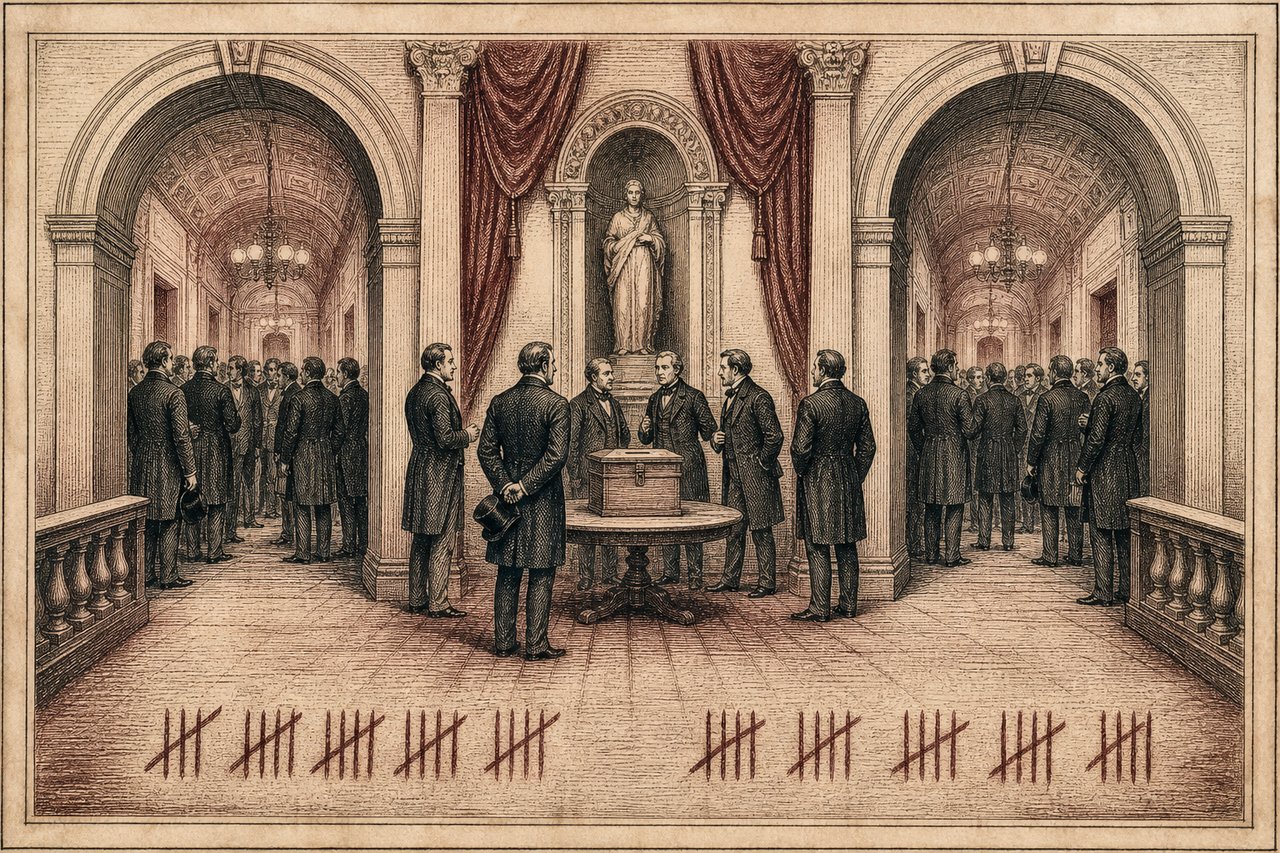
Most decisions in the House of Commons are taken without anyone counting heads. The Speaker puts the question, MPs shout “Aye” or “No”, and the Speaker judges which side is louder. But when the result is unclear or contested, the Commons falls back on one of its oldest and most physical procedures: the division, in which members literally walk through corridors to have their votes counted and recorded by name.
On the voices, then in the lobbies
Every vote begins “on the voices”. The Speaker says “As many as are of that opinion say Aye… of the contrary No”, listens to the response, and declares a result. If no one disputes it, that is the end of the matter.
If the result is challenged — or genuinely close — the Speaker calls a division. Division bells ring throughout the parliamentary estate, and MPs have a few minutes to reach the chamber. They then vote by walking through one of two corridors beside the chamber: the Aye lobby for those in favour, the No lobby for those against. As they pass, clerks record each member’s name.
Tellers and the count
Each side appoints two tellers — four MPs in total — who stand at the lobby exits and count the members passing through. The tellers are trusted representatives of both the Aye and No sides, so that neither can dispute the figures. When counting is complete, the tellers line up before the Speaker and announce the totals. Because tellers are doing the counting, they are not themselves included in the recorded vote.
The Speaker reads out the result — for example, “The Ayes to the right, 233; the Noes to the left, 94” — and declares the question carried or not. Every member’s vote is then published by name, which is what makes a division a permanent, public record rather than a private show of hands.
Reading a result: the majority
The headline figure is the majority — the gap between the two totals. A division won by 244 to 144 is a majority of 100. Over time, the size and direction of majorities tells you how secure a government is and which issues are dividing the parties. A government with a large working majority will win routine divisions comfortably; narrow or lost divisions are a sign of trouble, rebellion, or a genuinely open question.
Whips, rebellions and free votes
How MPs vote is shaped by the whips — party officials who issue instructions on attendance and direction. The strongest, a three-line whip, is a firm command to attend and vote the party line; defying it can carry disciplinary consequences. Most divisions break cleanly along party lines for exactly this reason.
When MPs vote against their own party’s whip, it is a rebellion, and a large rebellion is one of the clearest signals of political strain. At the other extreme, on certain questions — often matters of personal conscience — the parties may grant a free vote, lifting the whip entirely so that members vote according to their own judgement. Free votes produce results that cut across party lines and are studied closely as a measure of genuine opinion in the House.
Why divisions matter
The division is more than a counting mechanism. Because it records every member by name, it makes MPs individually accountable to their constituents for the decisions they take. A constituent can check exactly how their representative voted on any recorded question — and, where they disagree, can raise it directly. The Registry’s From Westminster dispatches report notable recent divisions, the guide to how a bill becomes law shows where in the legislative process these votes fall, and the guide to writing to your MP explains how to take up a vote with the person who cast it.
Questions & Answers
What is a division in the House of Commons? +
A division is a formal recorded vote. When the result of a question is not clear from MPs shouting 'Aye' or 'No', the Speaker calls a division, and MPs walk through one of two lobbies — Aye or No — to have their vote counted and recorded by name.
What are the voting lobbies? +
The Aye lobby and the No lobby are corridors on either side of the Commons chamber. MPs voting in favour walk through the Aye lobby; those against walk through the No lobby. Clerks record each name and tellers count the numbers.
What are tellers? +
Tellers are four MPs — two for each side — who count the members passing through the lobbies and report the totals to the Speaker. Tellers are not themselves counted in the vote totals they report.
What does 'Aye' and 'No' mean? +
'Aye' is a vote in favour of the question being put; 'No' is a vote against. The Speaker first judges the result 'on the voices'; if challenged, a division settles it with a precise, recorded count.
What is a whip in voting terms? +
A whip is both a party official and an instruction. A 'three-line whip' is the strongest instruction to attend and vote a particular way. MPs who defy a strong whip can face disciplinary consequences, though they are free to do so.
What is a free vote? +
A free vote is one where the parties do not whip their MPs, who vote according to conscience. Free votes are typically used for matters of personal morality or constitutional conscience rather than government policy.
Can I find out how my MP voted? +
Yes. Division results are public and record every MP by name and how they voted. They are published through Parliament's official services, so you can check your own MP's record on any recorded vote.
What is a majority in a division? +
The majority is the difference between the Aye and No totals. A government 'with a majority of 80', for example, can expect to win most divisions by around that margin when its MPs follow the whip.