Northern Ireland's Young People and the Brexit Question
For young people in Northern Ireland, leaving the EU raised questions found nowhere else — the border, identity, the peace settlement. This piece examines why.
7 min read
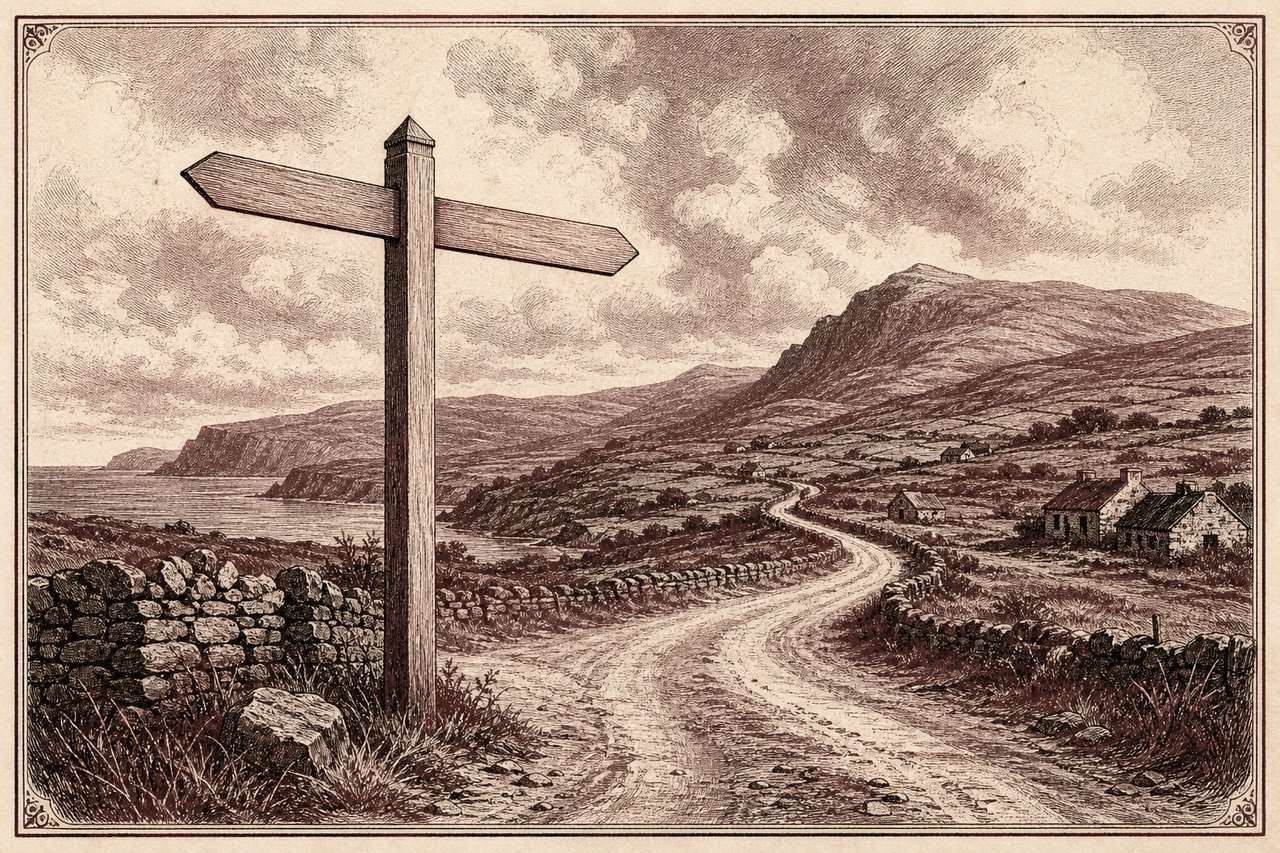
Nowhere in the United Kingdom did the question of leaving the European Union carry the specific weight it did in Northern Ireland. For young people there in particular, the debate touched matters — the border, identity, and the architecture of the peace settlement — that simply did not arise in the same form in Great Britain. Student walkouts and youth appeals during the period reflected that distinct stake.
Why the question was different
Three features set Northern Ireland apart in the debate:
- The only land border. Northern Ireland shares the UK’s only land frontier with an EU member state. Any change to the rules governing that border had immediate, tangible consequences for daily life, trade and movement.
- The peace settlement. The Good Friday Agreement is built on a framework that assumed an open border and shared membership. Changes to that framework raised sensitive questions about how the settlement would be maintained.
- Identity and citizenship. The Agreement allows people in Northern Ireland to identify as British, Irish or both, and to hold the corresponding citizenships. EU membership had been a shared backdrop to that arrangement; its removal touched questions of identity directly.
A life lived across the border
For many young people the border was not an abstraction but a routine. People in the region cross it to study, to work, to play sport and to see family, and an open frontier had made those movements unremarkable for a generation that grew up after the checkpoints came down. Shared membership of the same customs union and single market was part of what kept the border invisible, so the prospect of its return was felt first in the texture of ordinary life rather than in the language of trade policy. Concerns about higher education on both sides of the line, and about access to the European programmes that had funded study and exchange, gave the question a particularly concrete edge for students.
The youth response
Young people in Northern Ireland engaged with these questions through the channels available to them, including school walkouts, public appeals and participation in the wider youth campaigns of the period. The grievance was less about the abstract economics of membership than about the concrete prospect of new friction on a border that, for that generation, had been effectively invisible their whole lives.
The settlement that followed
The arrangements eventually adopted to manage the border — keeping Northern Ireland aligned with certain EU rules to avoid checks on the island of Ireland, while creating new processes for goods arriving from Great Britain — proved among the most contested outcomes of the entire process. The first version, the Protocol on Ireland and Northern Ireland, drew sustained objection within the region, particularly from unionist parties who argued that new checks on goods from Great Britain weakened Northern Ireland’s place in the United Kingdom. It was renegotiated and revised, most substantially in the agreement known as the Windsor Framework, and the devolved institutions at Stormont were suspended for a prolonged period during the dispute over it. The detail changed repeatedly; the underlying difficulty did not.
Underlying all of it is the principle of consent written into the Good Friday Agreement, which holds that Northern Ireland’s constitutional status cannot change without the agreement of its people, and the arrangements themselves are subject to periodic review and votes. For the young people who protested, the episode was an early lesson in a hard constitutional reality: that Northern Ireland’s circumstances are genuinely exceptional within the UK, and that decisions taken for the whole inevitably land there in a particular and complicated way.
Questions & Answers
Why was leaving the EU different for Northern Ireland? +
Northern Ireland shares the United Kingdom's only land border with an EU member state, so changes to border rules had immediate consequences for daily life, trade and movement. The peace settlement and questions of identity and citizenship also gave the debate a weight not found elsewhere in the United Kingdom. These features set the region apart throughout the process.
How does the Good Friday Agreement relate to the border? +
The Good Friday Agreement is built on a framework that assumed an open border and shared EU membership. Changes to that framework raised sensitive questions about how the settlement would be maintained. This is why border arrangements were treated as far more than a technical or economic matter.
How did the question of identity and citizenship arise? +
The Agreement allows people in Northern Ireland to identify as British, Irish or both, and to hold the corresponding citizenships. EU membership had been a shared backdrop to that arrangement. Its removal touched directly on questions of identity for many people in the region.
How did young people in Northern Ireland respond to Brexit? +
Young people engaged through the channels available to them, including school walkouts, public appeals and participation in the wider youth campaigns of the period. The concern was less about the abstract economics of membership than about the concrete prospect of new friction on a border that had been effectively invisible for their whole lives. These actions reflected a distinct local stake in the outcome.
What were the school walkouts about? +
Student walkouts were a visible form of protest during the period, expressing concern about the prospect of a harder border and its effect on the peace settlement. They formed part of a broader pattern of youth engagement across the United Kingdom, which also included campaigns such as youth-led movements on the EU question. In Northern Ireland the grievance had a particular local character.
What border arrangements were eventually adopted? +
The arrangements kept Northern Ireland aligned with certain EU rules to avoid checks on the island of Ireland, while creating new processes for goods arriving from Great Britain. These proved among the most contested outcomes of the entire process. They have been revised more than once since being introduced.
What lasting lesson did the episode offer? +
For the young people who protested, the episode was an early lesson in a hard constitutional reality: Northern Ireland's circumstances are genuinely exceptional within the United Kingdom. Decisions taken for the whole inevitably land there in a particular and complicated way. That distinctiveness has continued to shape debate over the region's arrangements.