The People's Vote Campaign
For three years a coalition pressed for a public vote on the Brexit terms. This retrospective examines what the People's Vote sought, and why it failed.
8 min read
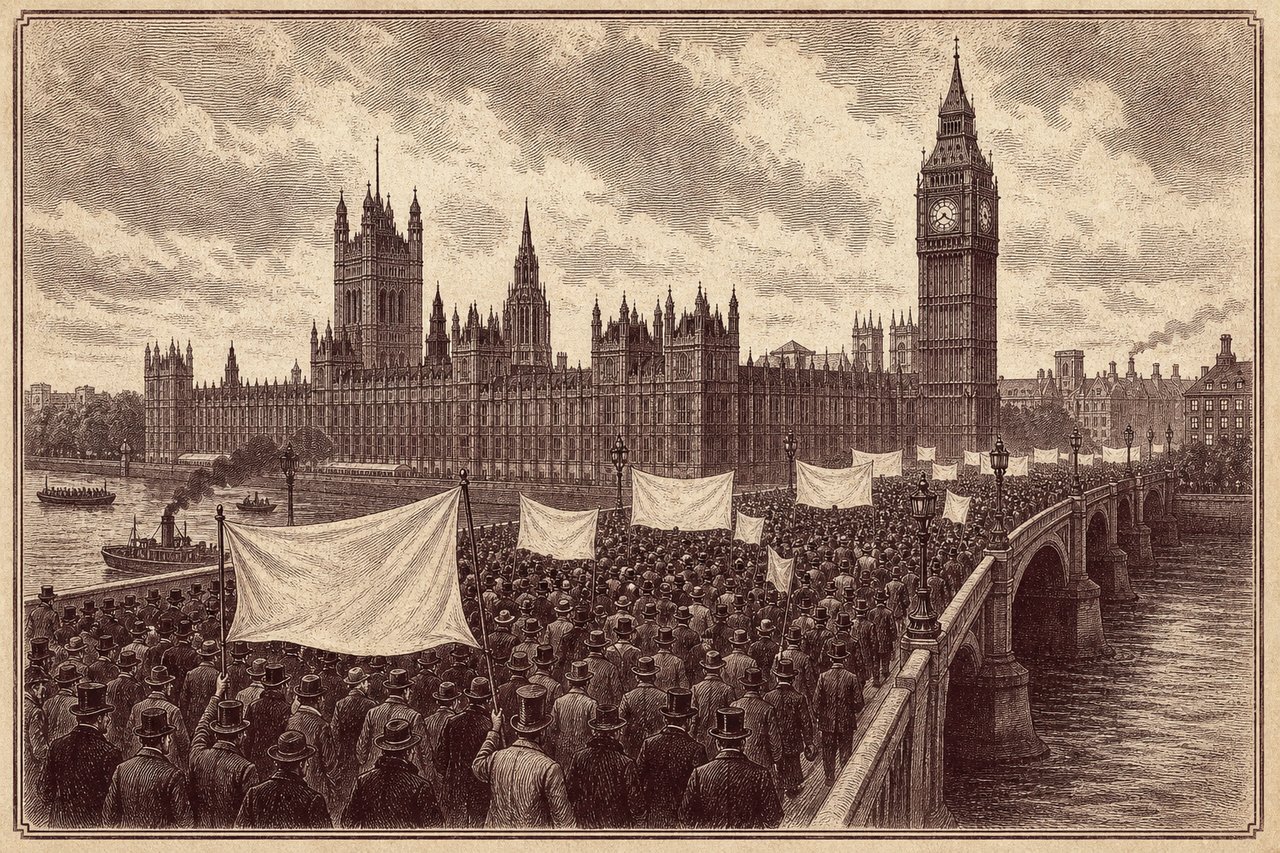
Between the referendum and the United Kingdom’s eventual departure, the most visible counter-current in British politics was the demand for a “People’s Vote” — a further referendum, this time on the negotiated terms rather than the principle of leaving. This retrospective sets out what the campaign was and why, despite mobilising some of the largest demonstrations in recent memory, it did not prevail.
The core demand
The campaign’s argument rested on a distinction: the 2016 vote, it held, had endorsed leaving in the abstract, but the public had never been asked to approve a specific deal. As the concrete terms emerged, supporters argued, voters were entitled to a confirmatory ballot — typically framed as a choice between the negotiated deal and remaining. Critics countered that a second vote would override the first and corrode trust in the result of a settled democratic decision.
How it organised
The People’s Vote effort was a coalition rather than a single body, drawing together established pro-European organisations, cross-party politicians, and a large volunteer base. Several youth-led groups formed a distinct wing of the movement, arguing that the generation with the longest stake in the outcome had been the least likely to have voted for it. The campaign’s signature was the mass march: a series of demonstrations through central London that drew crowds estimated in the hundreds of thousands.
The marches and the moments
The demonstrations gave the campaign its public face. The largest, the “Put It to the People” march in March 2019, was among the biggest protests London had seen in a generation, and an earlier march the previous autumn had already drawn vast numbers. These were carefully staged set-pieces, timed to coincide with key parliamentary moments and designed to project the scale of opposition to leaving without a confirmatory vote. The march names themselves — “Put It to the People”, “Together for the Final Say” — restated the core demand in a single line. Between the big set-pieces, the same coalition ran street stalls, registration drives and local groups, so the marches were the visible peak of a continuous organising effort rather than isolated events.
Why it fell short
A number of factors are usually cited for the campaign’s ultimate failure:
- No parliamentary majority. A second referendum repeatedly failed to command a majority in the Commons, even at moments when the government’s own deal could not pass either.
- The coalition’s breadth was also its weakness. Holding together figures who agreed on a second vote but disagreed on much else proved difficult.
- The 2019 general election settled it. The election returned a clear majority for a government committed to leaving on its negotiated terms, removing the parliamentary route to a further referendum.
Inside the Commons, the idea was tested directly. During the “indicative votes” of 2019, when MPs tried to find any option that could command a majority, a confirmatory referendum attracted significant support but no outright majority, and a later attempt to attach the condition to the withdrawal legislation also failed. The campaign could fill the streets, but it never assembled the roughly 320 votes needed in the one room where the question would actually be decided.
Place in the record
The People’s Vote campaign is significant as one of the largest sustained protest movements of the era, and as a case study in the limits of extra-parliamentary mobilisation. It demonstrated that very large demonstrations and broad public profiles do not, on their own, translate into legislative outcomes without a majority in the Commons to carry them. Documented neutrally, it is an essential part of the period’s history — and a recurring reference point in debates about when, and whether, a democratic decision should be revisited.
Questions & Answers
What was the People's Vote campaign? +
The People's Vote was a campaign for a further referendum on the United Kingdom's departure from the European Union, focused on the negotiated terms rather than the principle of leaving. It was the most visible counter-current in British politics between the 2016 referendum and eventual departure. The campaign mobilised some of the largest demonstrations in recent memory.
What exactly was the campaign asking for? +
The argument rested on a distinction: the 2016 vote had endorsed leaving in the abstract, but the public had never been asked to approve a specific deal. As the concrete terms emerged, supporters argued voters were entitled to a confirmatory ballot, typically framed as a choice between the negotiated deal and remaining. Critics countered that a second vote would override the first and corrode trust in a settled democratic decision.
How was the People's Vote campaign organised? +
It was a coalition rather than a single body, drawing together established pro-European organisations, cross-party politicians and a large volunteer base. Several youth-led groups formed a distinct wing, arguing that the generation with the longest stake in the outcome had been least likely to have voted for it. The campaign's signature was the mass march through central London.
How large were the People's Vote demonstrations? +
The campaign organised a series of demonstrations through central London that drew crowds estimated in the hundreds of thousands. These marches made it one of the largest sustained protest movements of the era. Their scale, however, did not translate directly into parliamentary outcomes.
Why did the People's Vote campaign fail? +
A second referendum repeatedly failed to command a majority in the Commons, even at moments when the government's own deal could not pass either. The breadth of the coalition was also a weakness, as holding together figures who agreed on a second vote but disagreed on much else proved difficult. The 2019 general election then returned a clear majority for a government committed to leaving on its negotiated terms, removing the parliamentary route.
What role did young people play in the campaign? +
Several youth-led groups formed a distinct wing of the movement, arguing that younger people had the longest stake in the outcome yet had been less likely to vote in 2016. Their involvement gave the campaign a generational dimension alongside its cross-party and pro-European elements. The wider movement is examined in the article on the Our Future Our Choice campaign.
What is the campaign's place in the historical record? +
It is significant as one of the largest sustained protest movements of the era and as a case study in the limits of extra-parliamentary mobilisation. It demonstrated that very large demonstrations and broad public profiles do not, on their own, translate into legislative outcomes without a majority in the Commons. It remains a recurring reference point in debates about when, and whether, a democratic decision should be revisited.