When Hundreds of Young People Lobbied Their MPs in Person
Mass constituent lobbies have a long history at Westminster. This report examines how a coordinated day of in-person lobbying works, and what it can achieve.
13 min read
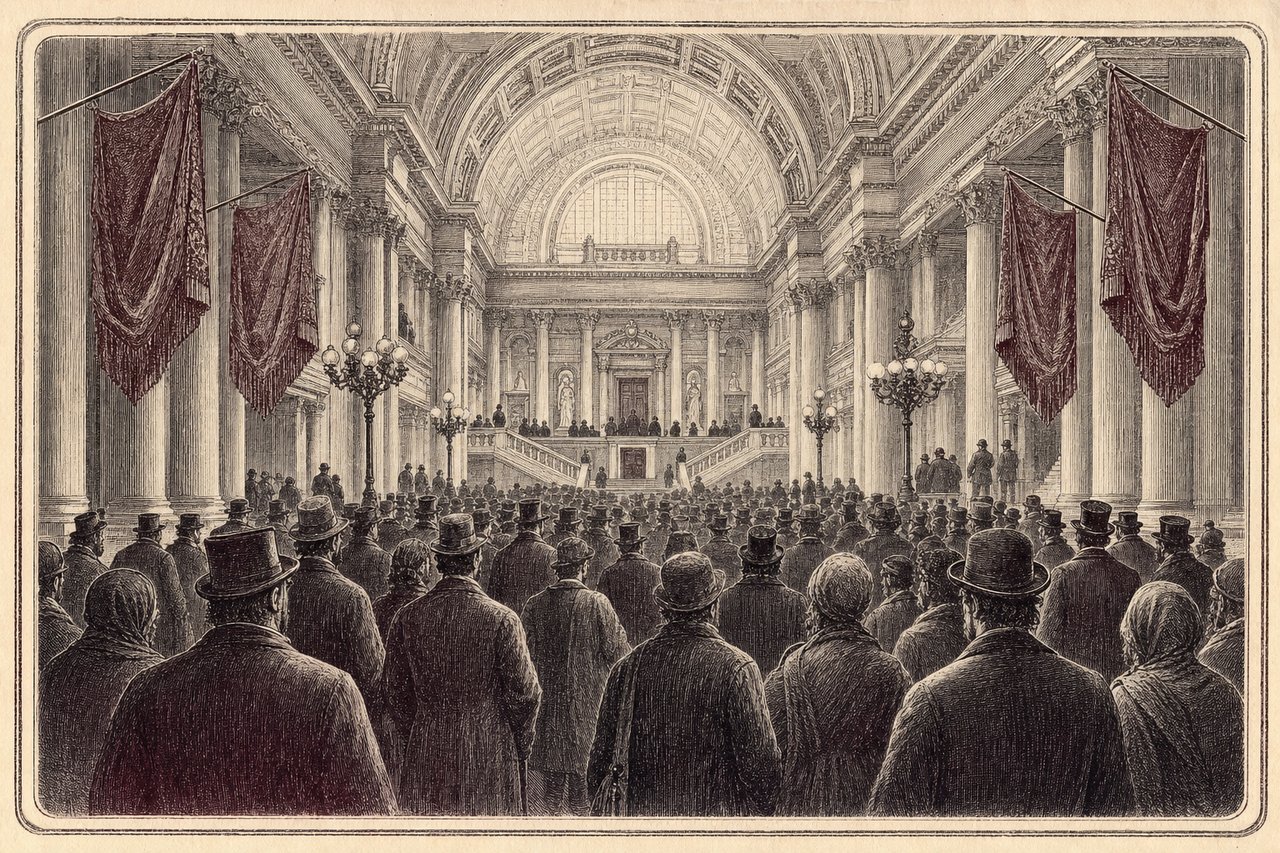
The mass lobby — hundreds or thousands of constituents travelling to Westminster to meet their own MPs on a single coordinated day — is one of the oldest forms of organised civic pressure in the British system. During the most contested years of the Brexit process, youth-led campaigns adopted the format with particular visibility, turning it into a recurring fixture of the political calendar. This report examines how the format works, what it achieves, and why, in an age of instant digital contact, physically turning up still matters.
The constituency link at the heart of it
A mass lobby is built on a single structural fact of the British system: every voter has one MP, determined by where they live, who is expected to represent them. Rather than staging a single demonstration aimed at the public mood, a mass lobby coordinates many individual meetings, each between a constituent and the specific Member for their seat. The logistics follow from that link — participants are helped to identify their constituency, to request a meeting through the MP’s office in advance, and to prepare the one or two points they intend to raise.
The format’s distinctive strength is that it confronts a representative with identifiable voters from their own seat. A letter can be filed and a petition counted, but a constituent standing in the central lobby, having travelled to be there, is harder to set aside. For younger participants in particular, the lobbies served a second purpose: they were a route into the parliamentary process for people who had often not engaged with it directly before, demystifying a building and an institution that can seem remote.
How a day of lobbying is organised
Behind the visible event lies a chain of preparation. Understanding that chain explains both the format’s power and its limits.
Embed this graphic
The preparation matters because an unstructured crowd achieves little inside Parliament. A lobby converts a general sentiment into hundreds of specific, seat-level conversations, each one a constituent exercising a recognised right. The youth campaigns of the Brexit years were notably disciplined about this, pairing the spectacle of numbers with careful briefing so that participants arrived with a clear, consistent ask.
What in-person lobbying achieves
The honest assessment of any single lobby is that it rarely changes a vote on its own. An MP with a firm party line and a settled view is unlikely to be turned by one meeting. The effects are real but cumulative and indirect:
- It raises salience. A day of meetings signals to an MP’s office that constituents care enough about an issue to travel and turn up, which weighs in how the Member prioritises their attention.
- It builds civic capacity. Many participants, especially younger ones, leave a lobby more confident and more engaged, going on to use other channels — correspondence, surgeries, local campaigning — long after the event.
- It generates coverage. Local media reporting of constituents meeting their MP carries the issue to voters who did not attend, extending the lobby’s reach well beyond the building.
These effects compound over time. A campaign that lobbies repeatedly, in many seats, builds a standing reputation that shapes how MPs anticipate and respond to it — a form of influence that no single day produces but that sustained organising can.
The constitutional logic
Mass lobbying sits comfortably within the constitutional design of the House of Commons. As discussed in the Registry’s analysis of the voting franchise and of parliamentary correspondence, MPs are not delegates bound to a mandate but representatives expected to weigh constituents’ views alongside their own judgement and their party’s position. The lobby is a structured way of placing constituent opinion directly in front of that judgement.
This is why the format is legitimate regardless of the cause it serves. It does not seek to coerce a representative; it seeks to inform one, in person, on the authority of the constituency relationship. The same mechanism is available to a pensioners’ group, a trade union, a charity or a youth movement, and has been used by all of them.
Why turning up still matters
In an era when contacting an MP has never been easier — a form, an email, a social-media mention — it is reasonable to ask why physical presence retains its force. The answer lies in cost and signal. A template email is almost free to send, and offices know it; its informational value is correspondingly low. Travelling to Westminster, by contrast, is costly in time and effort, and that cost is itself the signal. It communicates a depth of concern that convenient channels cannot, precisely because it is inconvenient.
That does not make the easier channels worthless — they matter at the margins, and for many issues they are the appropriate tool. But the mass lobby endures because it does something the others cannot: it makes constituents unignorable, in person, in the building where decisions are taken. Whatever the cause it is used for, the practice illustrates a durable feature of the British system — the right of any constituent to seek an audience with the person elected to represent them, and the political reality that showing up still counts.
For readers who want to act on a single issue without travelling to Westminster, the Registry’s guide to writing to your MP and its explanation of submitting evidence to a select committee set out the everyday channels that complement the set-piece lobby.
Questions & Answers
What is a mass lobby of Parliament? +
A mass lobby is a coordinated day on which large numbers of constituents travel to Westminster to meet their own Members of Parliament in person, usually to raise a single shared issue. It is built on the constituency link rather than on a general demonstration of public mood.
How is a mass lobby different from a protest march? +
A march is aimed at the public and the media and is organised around visibility. A mass lobby is aimed at individual MPs and is organised around pre-booked meetings between a Member and the voters of their own seat. One demonstrates scale; the other applies the constituency relationship directly.
Can any constituent lobby their MP? +
Yes. Any constituent has the right to seek a meeting with the MP who represents the area where they live, whether at Westminster or at a local surgery. A mass lobby simply coordinates many such meetings on a single day.
How do you arrange to lobby your MP at Westminster? +
Identify your constituency and MP, then contact the MP's office in advance to request a meeting, stating that you are a constituent and what you wish to discuss. Organised lobbies usually handle the logistics and brief participants on the points to raise.
Do MPs have to meet constituents who lobby them? +
MPs are not legally obliged to meet every constituent on demand, but most regard responding to constituents as a core duty and will arrange meetings where they can. A pre-booked request from a named constituent is far more likely to be honoured than an unannounced approach.
Does lobbying in person actually change how an MP votes? +
Rarely on its own. A single lobby seldom flips a vote. Its effects are cumulative and indirect — raising the salience of an issue, building the confidence of participants, and generating local coverage that reaches other voters.
Why were young people prominent in the Brexit-era lobbies? +
Youth-led campaigns adopted the mass-lobby format because it gave a generation that polled distinctively on the European question a direct, structured way to put its views to MPs, and because it served as an accessible entry point into the parliamentary process.
Are MPs delegates or representatives? +
Under the British constitutional tradition, MPs are representatives, not delegates. They are expected to weigh constituents' views alongside their own judgement and party position, rather than being bound to vote as instructed. This is why lobbying informs rather than dictates a Member's decision.
What is an MP's surgery? +
A surgery is a regular, advertised local session at which an MP meets constituents individually to hear cases and concerns. It is the routine, year-round counterpart to a one-off mass lobby at Westminster.
How many people are needed for a mass lobby to be effective? +
There is no fixed threshold. Effectiveness depends less on a single national total than on how many individual constituencies are represented, since the pressure operates seat by seat through each MP's own voters.
What should a constituent raise in a lobbying meeting? +
One or two specific, clearly stated points work best — a particular vote, a question to be raised with a minister, or a concrete request — supported where possible by personal experience. Focused asks are more effective than general statements of opinion.
Is mass lobbying a recent phenomenon? +
No. The mass lobby is one of the oldest organised forms of civic pressure in the British system, used by trade unions, charities and campaigns for well over a century. The Brexit-era youth lobbies were a modern application of a long-established practice.
What role does local media play in a mass lobby? +
Local coverage extends a lobby's reach beyond those who attend. A constituent meeting their MP, reported in the local press, communicates the issue to other voters in the seat and signals that constituents care enough to act.
Can lobbying be done remotely instead? +
Yes — letters, emails and surgery meetings are all valid channels, and matter at the margins. But organisers and participants consistently report that in-person presence at Westminster carries a weight that more convenient channels do not.
Where can I learn how to contact my MP in writing? +
The Registry's guide to writing to your MP sets out how to find your representative, what to write, and how the correspondence is handled.